Thursday, June 17, 2010

Wednesday-Thursday, June 15 & 16, 2010


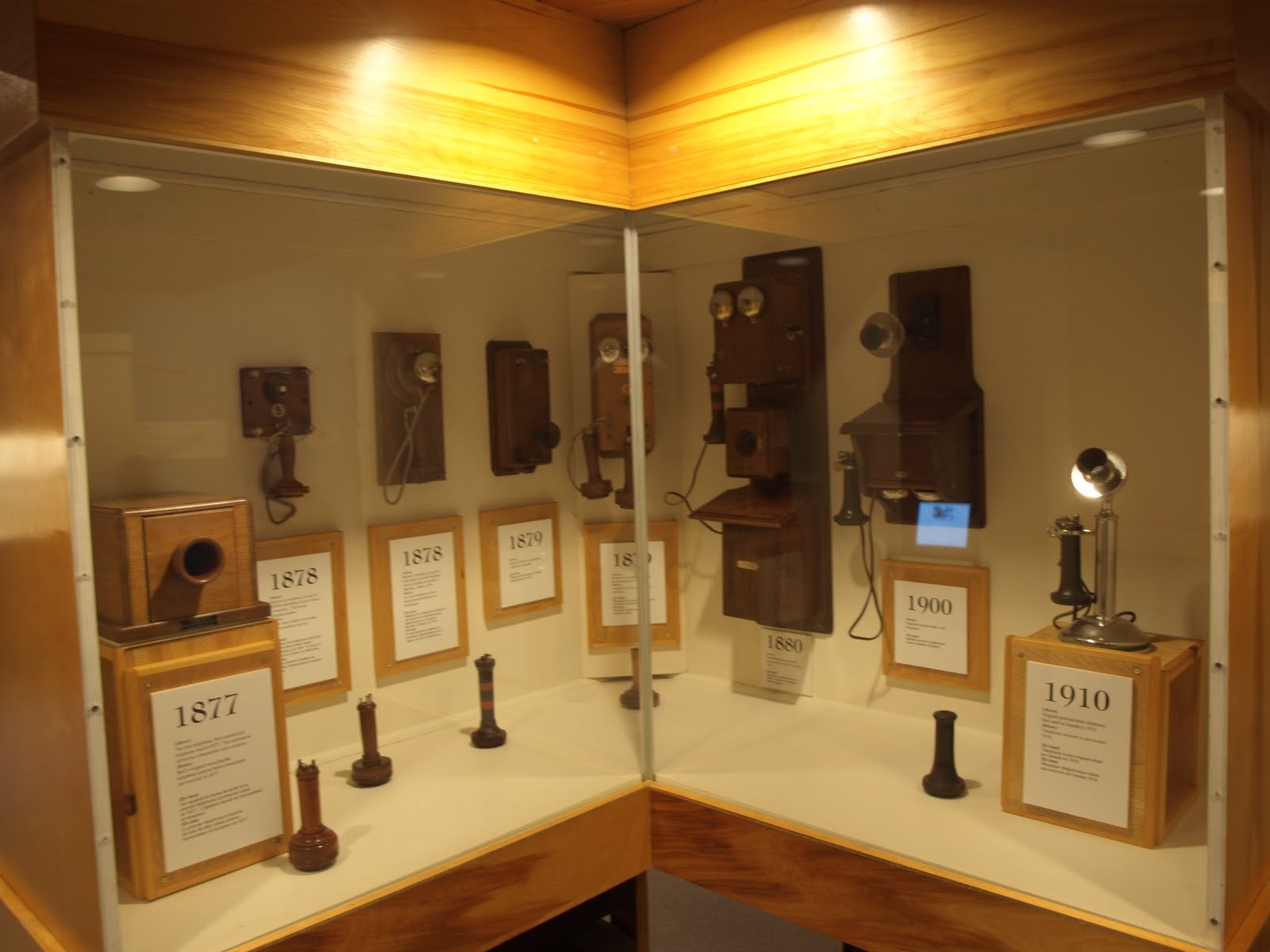
Wednesday was a 'drive' day from Baddeck to Halifax. Before we left, we drove into town to visit the Alexander G. Bell Museum. I would think that it would focus of the telephone. It did, but most of the museum was about 'flight.' Bell was involved in the first flight in Canada which took place in 1909. Bell worked also to build the hydrofoil boat. That's what I'm standing beside.
Thursday, we drove downtown and went to the Maritime Museum of the Atlantic. The focus of the museum was on the Halifax Explosion of 1917, The Titanic Tragedy of 1912, Boats, Ships, and the Jewish Immigration attempt of 1939.
There were 2 beautiful yachts docked at the Halifax wharf - one from England and one from Bermuda. I forgot to include those pictures.
The Halifax Explosion was the largest man-made explosion before the atomic bomb. A large ship that was loaded with munitions for WWI was accidentally rammed in the harbor, caught on fire, and exploded. There were thousands of tons of explosives that blew-up. Hundreds of people on shore were killed because of the size of the explosion.
The Jewish Immigration story is about a full ship of German Jews that were trying to flee Hitler's German. They were originally going to Cuba, but while in transit Cuba changed its laws, and they were refused entry. They were refused in Florida also, and tried to immigrate to Nova Scotia and were denied there also. They had to go back to Germany and many were sent to concentration camps and died. On the list was a 'Levin' and a 'Finkelstein', Connie's maiden name and her grandmother's maiden' name.
The Titanic Tragedy is familiar to most and there are many artifacts in the museum. We went to the cemetery where over 300 casualties are buried. The little child's grave is a focal point in the cemetery. Many of the graves have only a number, no name. Many of those lost were never positively identified.
The local park had some beautiful flowers, and I couldn't resist putting four in today's blog. It rained off and on today and the poppies and iris's were still wet. I thought that made them especially photographic.
We have a couple of other downtown places to go, but didn't have time today.


Wednesday, June 16, 2010

Tuesday, June 15, 2010


Today we went to Fort Louisbourg which is the largest reconstructed 18th century historic sight in North America. It was rebuilt to look exactly as it would have in 1744. The site is huge, and yet it only represents 20% of what was here in 1744. The people that work at the fort are referred to as costumed interpreters and talk and act as they would have back in the day.

One of the first pictures is of Connie being challenged at the gate. Before that we were told of the value of the Fort to the French. The cod fish that were caught here in the 18th century were more valuable than the fur trading business from around the Hudson Bay and West.


The two gals that worked in the bakery were kind enough to show us their knitted socks and period shoes. We also visited their garden and got some advice.


The buildings were beautiful and the reproduction furniture was impressive. Even though all the buildings were destroyed and pilfhered over the years, there were still blueprints and old bills that covered everything that had been built.
We were also able to watch the cannon being fired. The soldiers that are marching are the ones that fired the cannon.

Everything about the fort was done in period. Even lunch was served in period. We had vegetable soup, broiled fish, and potatoes and carrots. The only utensil you were given was a spoon. I'm guessing the food was the same today as in 1744- expensive and small portions.

The church was very nice and we felt fortunate that we were the only people in the church at the time. One of the pictures is of one of the friars sitting next to a large buffet. He could very easily have been 200 years old.


Everything was done beautifully.! It was a great stop! Maybe too many pictures, but I thought they needed to be shown to get an idea of the size of the site.


Also, the photo and plaque about the "loophole" are interesting. Is that where the phrase "looking for a loophole" came from?


The photo of the picture is what the harbor looked like back in 1744.


When we first arrived, we were shown how they caught the cod back in the 18th century. They had a board that the line was wrapped around, a sinker, and a hook just above the sinker. Maybe I'm a little slow, but don't you think that is where the phase 'hook, line and sinker' came from?


I forgot to mention that it was a nasty day. It rained occassionally, the temperature was about 12 C, and the winds gusted to 60 km+. But it still was a fun, fun day!

Sunday, June 13, 2010

Saturday & Sunday, June 12 & 13, 2010


Yesterday we drove to Charlottetown, the capital of PEI. Our first stop was at Founder's Hall, the visitor's center, where we walked through a narrirated display about the history of the founding of the "Domain of Canada" and the history of all the Provinces of Canada including the newest Province, Nunivut (?). I had to put in the picture about Confederation Day, July 1, 1867. It is now called Canada Day. Before 1867, all the Provinces were independent of one another,but still under the control of Great Britian. The Province of Canada included what is now Ontario and Quebec.

The photo of the boat (The Queen Victoria) in the exhibit represents the polititians from the Province of Canada coming to the first meeting about Confederation. Originally they were not invited to the meeting, but heard of the meeting, and took the first ship to Charlottetown for the meeting.

John McDonald was an important figure in the meetings and became the first Prime Minister of Canada. Connie was able to have a visit with him at one of the park benches in the downtown area.

The Parliment Chambers are pictured, and it should be noted that the Parlimemt only has 27 members, and they won't be in session until October. The photo of the large building is Province House. That is where the first talks about Confederation took place and it is now where the Parliment and House meet.
We had lunch in the harbor area and drove back to Cavandish via the National Park along the bay.
No trip to PEI would be complete without visiting the historic home in the novels/ series, Anne of Green Gables. Connie is shown next to the main character, Anne. She loves watching the series on public television.
Today we hit the road and drove to Baddeck, Nova Scotia. We will travel the Cabot Trail tomorrow.
The biggest event of the day was talking with our son, Toby, and granddaughters, Anna and Mary, on Skype. That was great to see and talk to the girls and Toby. Get with Connie through Facebook, and let's set up a time when we can skype with you.


Friday, June 11, 2010

Thursday-Friday, June 10 & 11, 2010


Thursday we left Seaside and drove through Bay of Fundy National Park. Surprisingly we only saw distant views of the bay. We did stop at Hopewell Provincial Park to view the "flower pot" rocks. If you have ever seen a photo of the tidal changes in the Bay of Fundy, the "flower pot" rocks are what they show. We arrived at close to 'medium tide' and were able to walk around on the ocean floor. At high tide, the water would have been 14' higher. The tidal change at Hopewell Park is the greatest in the world. The park closed at 5:oo and the high tide was later than that, so we decided to drive on to Prince Edward Island one day early.

The drive was only just over two hours and we arrived in Cavendish, PE, at the KOA. We crossed over into PEI on the Confederation Bridge, the longest bridge over ice covered water in the world. The bay wasn't ice covered when we crossed, so in the summer it's just a long bridge. The bridge is 12.9 km (8 miles) long and was opened in 1997. All traffic prior to that was by one of two ferries.
Today, Friday, we drove the North Cape Coast Drive and stopped at "The Bottle House" at Cap Egmont. Then we went to the "Potato Museum" at O'Leary. The photo next to me standing by the museum sign is of a newly planted potato field. Imagine how the fields will look when the plants begin to flower. PEI produces lots of seed potatoes for export worldwide.
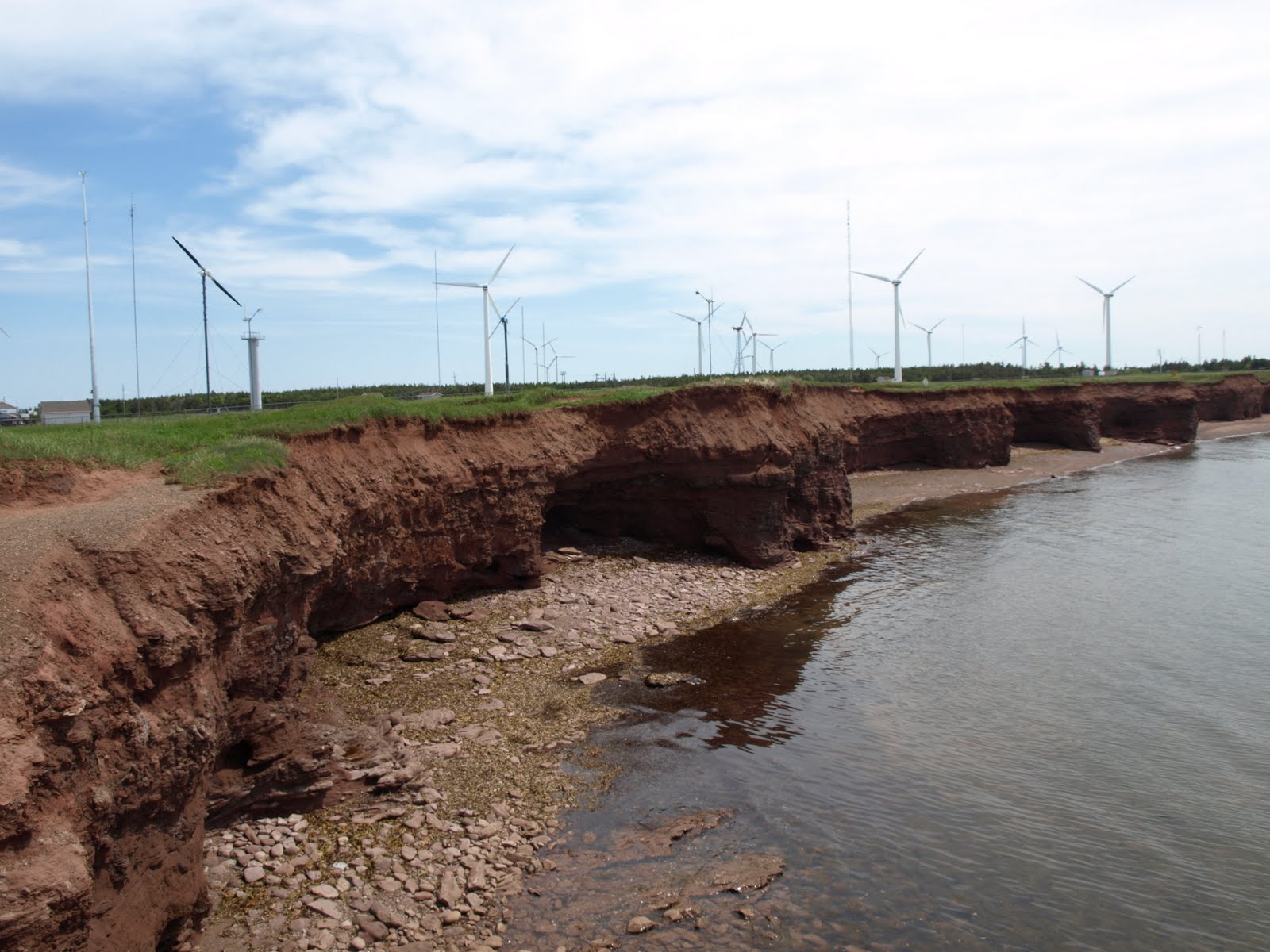
Later we drove to the end of the island, North Cape. North Cape has a large wind farm and is home to Canada's National Wind Energy Institute. North Cape also lays claim to the longest natural rock reef in North America. It is the point where the waters of the Gulf of St. Lawerance and the Northumberland Straits collide.
On our way back to Cavendish, we stopped in Summerside and walked around the waterfront. The weather was perfect - sunny and warm!